
Green Tea Extract and EGCG: What to Know
Caroline Woods
Please read first: this article is general educational information, not medical advice. Concentrated green tea extract has been associated with rare cases of liver injury, and the caution here is different from the one that applies to drinking tea. Talk to your doctor before taking a green tea extract supplement, particularly if you have a liver condition.
Quick answer on green tea extract
Green tea is one of the most studied beverages in the world and drinking it has an excellent safety record. Concentrated green tea extract is a different proposition, and the distinction is not pedantic. Extracts deliver doses of EGCG that would be difficult to reach by drinking, and rare cases of liver injury have been documented at those concentrations, particularly when taken on an empty stomach. If you want green tea, drinking green tea is the low-risk option. If you want an extract, take it with food and know what to watch for.
What EGCG actually is
Green tea contains a family of polyphenols called catechins, of which epigallocatechin gallate, mercifully shortened to EGCG, is the most abundant and the most studied.
Green tea differs from black tea because the leaves are heated soon after picking, which deactivates the enzymes that would otherwise oxidise those catechins. Black tea leaves are allowed to oxidise, converting much of the catechin content into other compounds. Same plant, Camellia sinensis, different processing, substantially different chemistry.
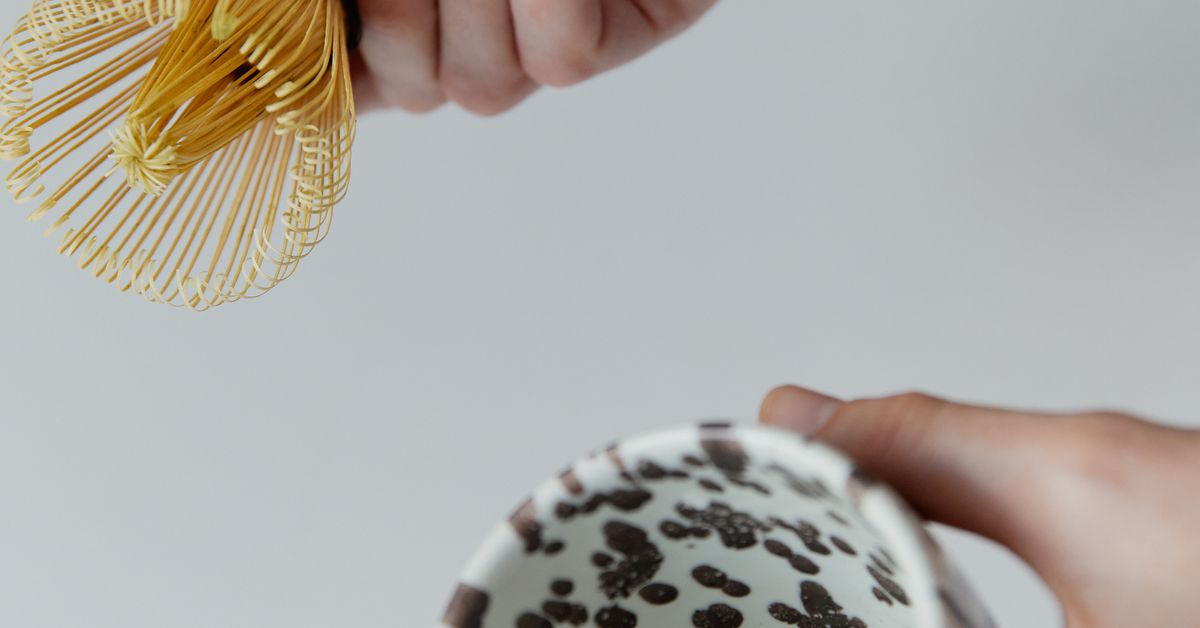
Matcha sits slightly apart again, because you consume the powdered leaf rather than an infusion of it, which means you get the whole leaf material rather than only what dissolved into hot water.
Green tea also contains caffeine and L-theanine, and that pairing is much of why tea feels different from coffee at comparable caffeine levels. We cover that combination in L-theanine and caffeine.
The dose gap between a cup and a capsule
This is the crux of the whole subject.
A cup of brewed green tea delivers a modest amount of EGCG, and the amount varies considerably with leaf quality, water temperature and steeping time. Concentrated extract supplements routinely deliver several hundred milligrams of EGCG in a single capsule, which represents a large number of cups compressed into one swallow.
That concentration is the entire point of an extract, and it is also the entire source of the additional risk. The centuries of reassuring human experience with green tea are experience with the beverage, at beverage concentrations. They do not automatically transfer to a capsule delivering many times that in one go.
This is a specific instance of a general principle we write about often: concentration changes the risk profile, not only the strength. It is the same logic that makes extraction worth doing and worth respecting.
The liver signal, stated plainly
Green tea extract is one of the botanicals most consistently associated with rare drug-induced liver injury in the published literature. The NIH LiverTox database carries a substantial entry for it, and reviews of herbal liver injury cases repeatedly name it.
Several things are worth holding at once here. The cases are rare relative to how widely the product is taken. They are associated with concentrated extracts rather than with drinking tea. Taking the extract on an empty stomach appears to increase risk, which is why taking it with food is the standard recommendation. And the reaction appears to be idiosyncratic, meaning it happens to particular individuals rather than being predictable from dose alone.
The practical version: if you take green tea extract, take it with a meal, avoid stacking it with other products that also contain it, and stop and see a doctor if you develop jaundice, dark urine, unusual fatigue, nausea or abdominal pain.
We flagged the same class of concern with ashwagandha and gotu kola. It is a pattern worth recognising rather than a reason to avoid the whole category.
What the research supports
Green tea and EGCG have been studied extensively for antioxidant behaviour, metabolic markers, and a wide range of other endpoints, much of it laboratory and observational work.
Observational studies in populations that drink green tea regularly are genuinely interesting, and they are also the kind of evidence that cannot easily separate the tea from everything else about the people drinking it. Intervention trials with extracts are more mixed and generally smaller.
The weight-loss claims that drive much of the extract market in particular are not well supported by the evidence, and they are also the context in which people take the highest doses, often fasted — which is the exact combination associated with the liver reports. That is an unfortunate alignment and worth naming.
A reasonable position
Drink green tea if you like green tea. It is pleasant, it is low risk, the caffeine and L-theanine combination is genuinely nice, and the population-level research is encouraging.
If you want a concentrated extract, treat it as a supplement with a real safety consideration rather than as tea in a capsule. Take it with food, keep the dose sensible, check whether anything else you take also contains it, and stop at the first sign of liver-related symptoms.
Frequently asked questions
Is green tea extract the same as drinking green tea? No. Extracts deliver EGCG at concentrations that would be difficult to reach by drinking, and the safety profile differs accordingly. Tea's long safety record is a record of the beverage.
What is EGCG? Epigallocatechin gallate, the most abundant and most studied catechin in green tea. Green tea retains more catechins than black tea because the leaves are heated early to prevent oxidation.
Can green tea extract damage the liver? Rare cases of drug-induced liver injury have been documented, associated with concentrated extracts rather than drinking tea, and appearing more likely when taken on an empty stomach. The NIH LiverTox database carries an entry.
Should I take green tea extract with food? Yes. Taking it on an empty stomach appears to increase the risk of liver-related reactions, so taking it with a meal is the standard recommendation.
Does green tea extract help with weight loss? The evidence does not support the claims made for it. That use also drives the highest doses, often taken fasted, which is the combination most associated with liver reports.
Does green tea extract contain caffeine? Usually yes, unless specifically decaffeinated. If you are sensitive to caffeine or already taking other sources, add it up.
Sources
LiverTox: Clinical and Research Information on Drug-Induced Liver Injury. Green Tea. National Institute of Diabetes and Digestive and Kidney Diseases.
National Center for Complementary and Integrative Health. Green Tea.
National Institutes of Health, Office of Dietary Supplements. Dietary Supplements for Weight Loss.
National Institutes of Health, Office of Dietary Supplements. Botanical Dietary Supplements: Background Information.
This article is general educational information and is not medical advice. Consult your physician or pharmacist before starting any supplement, especially if you have a liver condition, take prescription medication, or are pregnant or breastfeeding. These statements have not been evaluated by the Food and Drug Administration. This product is not intended to diagnose, treat, cure, or prevent any disease.


