
Fresh Turmeric vs Turmeric Powder: What's the Difference?
Caroline Woods
Fresh turmeric root and ground turmeric powder are the same plant, but they behave differently in the kitchen and the cup. Here is how they compare and when to use each.
Stand in front of the turmeric options and you have a choice: the knobbly fresh root in the produce aisle or the familiar golden powder in the spice rack. Both are turmeric, both are useful, and both share the same absorption quirk. This guide covers the practical differences and how to get the most from either.
Fresh vs powdered turmeric at a glance
Fresh turmeric is the raw root, with a brighter, more citrusy and peppery flavor and a higher moisture content. Turmeric powder is the dried, ground root, more concentrated by weight, shelf-stable, and convenient. Neither is clearly superior. Fresh is lovely for cooking and juicing, while powder is easier for everyday use and consistent dosing. Both share turmeric's central quirk: the key compounds are fat-soluble and best taken with a little fat.
Fresh turmeric root
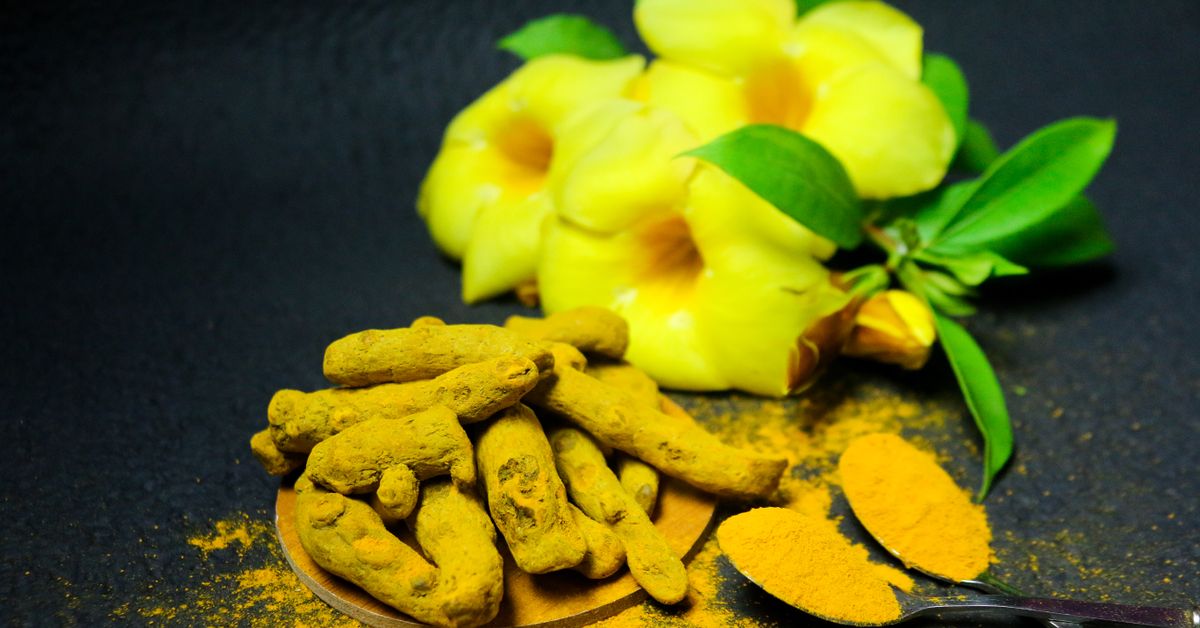
Fresh turmeric looks like a smaller, orange cousin of ginger, and it tastes brighter and more vibrant than the powder, with citrusy, slightly peppery notes. Because it is raw and full of moisture, it is wonderful grated into curries, juiced, or steeped into a fresh tea. The trade-offs are practical: it stains everything it touches a vivid yellow, it has a short fridge life compared with a jar of powder, and the amount of active compound varies from root to root. It is the choice for cooks who want the freshest flavor and do not mind the mess.
Turmeric powder
Ground turmeric is the dried root milled into the golden powder most people know. Drying concentrates it, so it is more potent by weight than fresh, and it is far more convenient: shelf-stable, easy to measure, and ready whenever you need it. It is the backbone of curry blends and golden milk. The main downside is that a raw dried powder is the form your gut has to work hardest on, which is why traditional recipes cook it with oil or simmer it into milk. For consistent daily use, powder is more practical than fresh, though a liquid extract is more practical still.
The absorption quirk they share
Whichever form you choose, the same rule applies. Turmeric's headline compound, curcumin, is poorly absorbed when isolated from the plant. The simplest fix works for both fresh and powder: take it with a little fat, since curcumin is fat-soluble. This is exactly why traditional turmeric cooking uses oil or ghee, and why golden milk is made with milk. We unpack the wider absorption debate in the absorption question.
What about supplements?
Fresh and powder are both food-first. If your goal is a consistent daily turmeric habit rather than cooking, a whole-root extract sidesteps the mess of fresh and the absorption limits of raw powder, since a liquid extract has already drawn the compounds out of the plant. We compare the supplement formats in formats compared, and cover the whole-root philosophy in whole-root vs curcumin. If you would rather have the whole picture in one place, our complete turmeric guide pulls every piece together. Our Golden Turmeric is a whole-root, alcohol-free extract built for exactly that kind of easy daily use.
Frequently asked questions
Is fresh turmeric better than powder? Neither is clearly better. Fresh has a brighter flavor and suits cooking and juicing, while powder is more concentrated by weight, shelf-stable, and convenient for everyday use.
Is fresh turmeric more potent than powder? By weight, dried powder is more concentrated because drying removes water. Fresh root has more moisture and a brighter flavor, but its active content varies from root to root.
How do you use fresh turmeric? Grate or slice it into curries, soups, and stir-fries, juice it, or steep it into a fresh tea. Pair it with a little fat to support absorption, and expect it to stain.
What helps you get more from turmeric? Taking it with a little fat, since its key compounds are fat-soluble, and choosing a whole-root extract rather than raw powder, since the compounds have already been drawn out of the plant.
These statements have not been evaluated by the Food and Drug Administration. This product is not intended to diagnose, treat, cure, or prevent any disease. This is not medical advice and is for informational purposes only. Before using any dietary supplement, always consult a licensed healthcare professional, especially if you are pregnant or breastfeeding, taking prescription or over-the-counter medications, have gallbladder problems, or have or suspect a medical condition.
Sources
Hewlings SJ, Kalman DS. Curcumin: A Review of Its Effects on Human Health. Foods. 2017.


