
How to Take a Turmeric Tincture: A Complete Beginner's Guide
Anthony Gucciardi
A turmeric tincture is one of the simplest supplements to use, once you know the four things that actually matter: how much, when, how to absorb it, and how to store it. Here is the complete beginner's guide.
You bought a bottle of turmeric tincture, and now you are holding a small amber dropper wondering how many squeezes, in what, and when. Turmeric is forgiving and pleasant to take, but a few simple habits will get noticeably more out of every bottle. This guide walks through all of it, start to finish, for someone who has never used one.
Using a turmeric tincture: the basics
Take one full dropper of turmeric tincture, one to three times per day, either straight on the tongue or mixed into water, tea, or coffee. Many people take it in the morning, but any time works. Because turmeric's key compounds are fat-soluble, taking it alongside a meal that contains some fat helps. Store the bottle somewhere cool and dark, keep the cap tight, and keep the dropper clean.
How much to take
Always start with the label on your specific bottle, because concentration differs between products. As a general guide, a typical turmeric tincture serving is one full dropper (often around one-eighth of a teaspoon), taken one to three times daily depending on the product and your preference.
If you are new to turmeric or to supplements in general, there is no harm in starting at the lower end, one dropper once a day, and settling in before moving toward the higher end of the label's range. This is simply the sensible way to begin anything new, giving you a chance to see how it sits with you.
Straight or in a drink
You have two easy ways to take a turmeric tincture, and both are fine.
Straight on the tongue. Squeeze a dropperful directly into your mouth. With an alcohol-free, glycerin-based tincture, the taste is warm, earthy, and lightly sweet rather than harsh, so most people find this pleasant and quick.
In a beverage. Add the dropper to water, tea, coffee, or a smoothie. The turmeric flavor folds into most drinks easily. Avoid stirring it into something boiling hot, since sustained high heat can degrade some of the more delicate aromatic compounds. Letting a hot coffee cool for a minute first is plenty.
Getting the most from every dropper
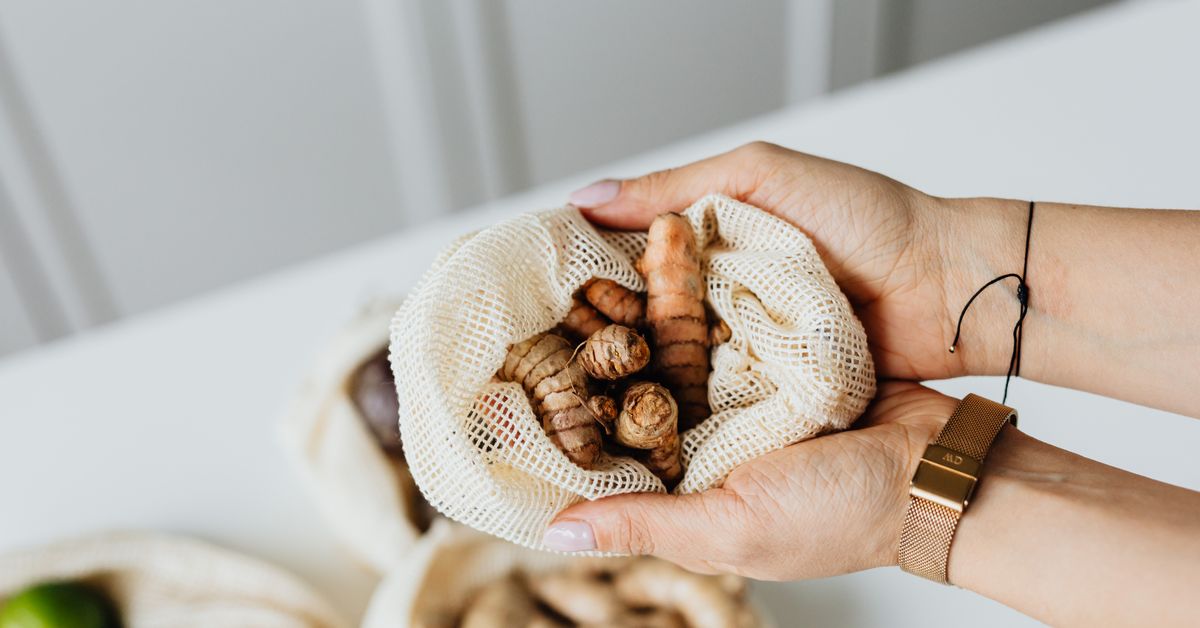
Turmeric's headline compound, curcumin, is poorly absorbed when isolated from the plant. The good news is that a liquid extract already addresses much of this by drawing the compounds out of the raw, chalky root, which is one of the real advantages a tincture has over a dry powder capsule, as we cover in formats compared.
You can help further with one simple habit. Curcumin is fat-soluble, so taking your turmeric with a meal or snack that contains some fat supports absorption, which is exactly why traditional turmeric dishes are cooked with oil or ghee. The simplest move: take your tincture around a meal rather than on a completely empty stomach. We dig into the wider absorption debate in the absorption question.
The best time of day
Turmeric is not a stimulant and has no caffeine, so timing is about routine, not biology. Many people take it in the morning as part of a daily ritual, often with breakfast, which doubles as a fat-containing meal to support absorption. If you take it more than once a day, spacing it across morning and evening is a common rhythm. The most important factor is consistency, since turmeric is traditionally used as a steady daily supplement rather than an as-needed one. Pick the time you will actually remember.
What turmeric is traditionally taken for
Turmeric has been valued for thousands of years across India, Southeast Asia, and the ancient world, and is traditionally used to support the body's natural, healthy inflammatory response, joint comfort and everyday mobility, and to provide antioxidant support. These are the time-honored reasons people fold it into a daily routine. Our Golden Turmeric is a whole-root, alcohol-free glycerin extract built for exactly this kind of simple daily use.
Storing your tincture
Tinctures are concentrated botanical liquids, so a few easy habits keep them at their best.
- Cool and dark. A cabinet or pantry away from heat and direct light is ideal. A glycerin tincture does not need refrigeration, though it will not hurt.
- Cap tight. Keeping the bottle sealed slows oxidation that can slowly degrade delicate compounds over time.
- Keep the dropper clean. Avoid touching the dropper directly to your mouth, since back-contamination is the fastest way to introduce microbial growth. Drip onto or into rather than placing it against your tongue.
- Note the dates. Follow the shelf-life and once-opened guidance on the label.
Putting it together
A simple first routine looks like this. One dropper with breakfast, taken straight or stirred into your morning drink, ideally around a meal with a little fat. Add a second or third dropper later in the day if your label suggests it and you want to. Keep the bottle in a cabinet, cap tight, dropper clean. Stay consistent for several weeks and it becomes an invisible part of your day. For choosing a quality product in the first place, see choosing a tincture.
Frequently asked questions
How do you take a turmeric tincture? Take one full dropper, one to three times daily, either straight on the tongue or mixed into water, tea, or coffee. Taking it around a meal with some fat helps absorption. Always follow your specific product's label.
How much turmeric tincture should I take? A typical serving is one dropperful, one to three times a day, but concentrations vary, so start with the label. Beginning at the lower end and building up is a sensible approach.
When is the best time to take turmeric tincture? Any time works since turmeric is not a stimulant. Many take it in the morning with breakfast, which also provides the fat that supports absorption. Consistency matters more than the exact hour.
Should I take turmeric on an empty stomach? Taking it with a meal that contains some fat supports absorption, since curcumin is fat-soluble. If you are sensitive to supplements on an empty stomach, food also smooths that out.
Can I put turmeric tincture in hot coffee or tea? Yes, but let very hot drinks cool for a minute first, since sustained high heat can degrade some of turmeric's delicate aromatic compounds.
These statements have not been evaluated by the Food and Drug Administration. This product is not intended to diagnose, treat, cure, or prevent any disease. This is not medical advice and is for informational purposes only. Before using any dietary supplement, always consult a licensed healthcare professional, especially if you are pregnant or breastfeeding, taking prescription or over-the-counter medications, have gallbladder problems, or have or suspect a medical condition.
Sources
Hewlings SJ, Kalman DS. Curcumin: A Review of Its Effects on Human Health. Foods. 2017.


