
Schisandra Berry: Benefits and Uses
Roger Maxwell
Please read first: this article is general educational information, not medical advice. Schisandra affects liver enzymes that metabolise many prescription drugs, which makes interactions a genuine consideration. Talk to your doctor or pharmacist before taking it if you are on any medication.
Quick answer on schisandra
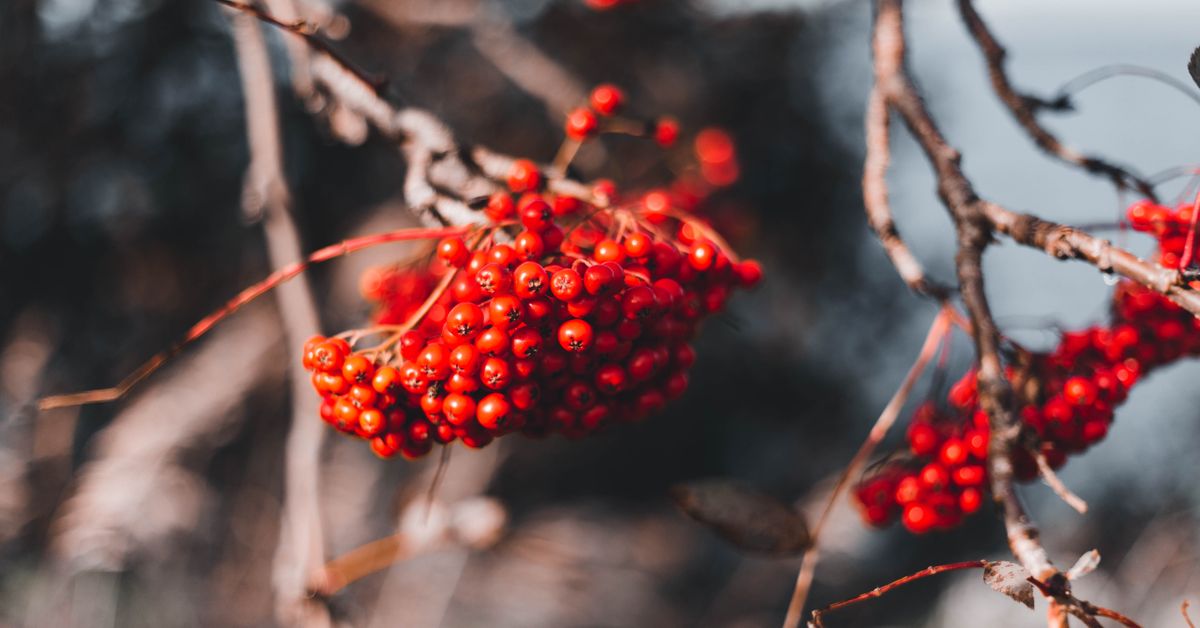
Schisandra (Schisandra chinensis) is a red berry from a climbing vine native to northern China, Korea and the Russian Far East. Its Chinese name, wu wei zi, means five-flavour berry, and it genuinely delivers sweet, sour, bitter, pungent and salty at once. It is one of the few plants with a substantial place in both traditional Chinese medicine and the Soviet adaptogen research programme, which makes it unusually well travelled. It also has the most clinically relevant drug interaction profile of any adaptogen we write about, which is the part most articles leave out.
Five flavours, and why that mattered
In traditional Chinese medicine, flavour is a classification system rather than a tasting note. Each of the five flavours is associated with particular organs and actions, so a berry containing all five was understood to act across the whole system rather than on one part of it.
That is why schisandra sits in the small group of herbs classed as superior in the Shennong Bencao Jing, the foundational Chinese materia medica, meaning herbs considered suitable for long-term use to maintain health rather than to treat illness. It is a tonic in the same sense that reishi is.
The flavour claim is not poetic licence, incidentally. Chew a dried berry and you get sour and sweet immediately, then a bitter and faintly saline aftertaste, with a resinous pungency from the seed. It is a genuinely strange thing to eat.
The Soviet connection
Schisandra is one of the plants that bridges two quite separate traditions, which is part of what makes it interesting.
It grows wild in the Russian Far East, where Nanai hunters were reported to use the dried berries to reduce hunger and fatigue on long hunts. That ethnographic account drew the attention of Soviet researchers in the mid-twentieth century, and schisandra became one of the plants studied alongside eleuthero and rhodiola in the programme that produced the term adaptogen. We tell that story in the history of adaptogens.
So schisandra arrived in Western usage through two doors at once, the Chinese materia medica and Soviet performance research. Most adaptogens came through only one.
Lignans, and what the research examines
Schisandra's characteristic compounds are a group of lignans, principally schisandrin and related molecules, concentrated in the seed rather than the flesh. This is why whole-berry preparations and seed-inclusive extracts differ from products made from pulp alone, and why the extraction method is not a detail.
Published research has focused on liver enzyme activity, on physical and mental performance under fatigue, and on antioxidant behaviour. A good deal of it is laboratory and animal work, and the human trials that exist tend to be small and, as with most of the Soviet-era literature, published in Russian under methodology that would not clear a modern review.
The honest read is that schisandra is one of the more thoroughly investigated adaptogens and the evidence is still early by clinical standards. Interesting, not established.
The interaction that actually matters
This is the section worth reading twice, because schisandra is genuinely different from most herbs on this point.
Schisandra lignans have been shown to affect cytochrome P450 enzymes, the liver enzyme family responsible for metabolising a very large share of prescription medication. When something changes the activity of those enzymes, it changes how much drug ends up in your bloodstream, which can mean either too much or too little.
That is not a theoretical concern of the kind that gets attached to every herb. It is a documented pharmacological effect with a plausible clinical consequence, and it puts schisandra closer to St John's wort than to, say, lion's mane in terms of how carefully it needs handling.
If you take any prescription medication, this is a conversation with a pharmacist before you start, not after. The general framework is in supplements and medications.
How it is taken
Traditionally the dried berries are decocted, simmered in water rather than steeped, often alongside other herbs in a formula rather than alone. Chinese practice tends to use schisandra as part of a combination, and it appears in several classical formulas.
Modern supplements are usually standardised extracts, commonly to schisandrin content. As always, the standardisation figure describes one measured compound rather than the whole preparation, a distinction covered in what standardized extract actually means.
The berries are also used in food and drink in Korea, most familiarly as omija-cha, a cold infusion with a striking pink colour and a sharp, complex flavour.
Who should be careful
Anyone on prescription medication, for the enzyme reasons above. Anyone with a liver condition, since schisandra acts on liver enzymes and that is not a system to experiment with when it is already compromised. Anyone pregnant, where it is generally advised against and where traditional sources describe effects on the uterus. And anyone with epilepsy or high intracranial pressure, where caution is conventionally recommended.
Frequently asked questions
What is schisandra used for? In Chinese tradition it is a superior-class tonic for long-term use. In modern usage it is classed as an adaptogen and studied for fatigue, physical and mental performance, and liver enzyme activity.
Why is it called the five-flavour berry? Because it contains sweet, sour, bitter, pungent and salty flavours at once, which in traditional Chinese classification implied it acted across the whole system rather than on one organ.
Does schisandra interact with medications? Yes, and more meaningfully than most herbs. Its lignans affect cytochrome P450 liver enzymes that metabolise many prescription drugs, which can change drug levels in either direction. Check with a pharmacist first.
What are schisandra lignans? A group of compounds, principally schisandrin and its relatives, concentrated in the seed rather than the flesh. This is why seed-inclusive preparations differ from pulp-only ones.
Is schisandra energising or calming? It is generally described as balancing rather than firmly either, and was studied in the Soviet programme for endurance and resistance to fatigue rather than for sedation.
Who should avoid schisandra? Anyone on prescription medication without checking first, anyone with a liver condition, anyone pregnant, and anyone with epilepsy or raised intracranial pressure.
Sources
National Center for Complementary and Integrative Health. Schisandra.
Panossian A, Wikman G. Pharmacology of Schisandra chinensis Bail: an overview of Russian research and uses in medicine. Journal of Ethnopharmacology.
National Center for Complementary and Integrative Health. Herb-Drug Interactions.
National Institutes of Health, Office of Dietary Supplements. Botanical Dietary Supplements: Background Information.
This article is general educational information and is not medical advice. Consult your physician or pharmacist before starting any supplement, especially if you take prescription medication, are pregnant or breastfeeding, or have a liver condition. These statements have not been evaluated by the Food and Drug Administration. This product is not intended to diagnose, treat, cure, or prevent any disease.


