
Shiitake Mushroom: Benefits and Uses
Natalie Richardson
Quick answer on shiitake
Shiitake (Lentinula edodes) is the functional mushroom most people have already eaten without thinking of it that way. It has been deliberately cultivated in East Asia for roughly a thousand years, is the second most produced edible mushroom in the world, and sits in the same beta-glucan research territory as turkey tail and maitake. It is also, unusually for this category, cheap and available in any supermarket. If you want to add a studied mushroom to your diet rather than your supplement shelf, this is the obvious one.
This article is general information, not medical advice. If you take prescription medication, are pregnant or nursing, or manage a health condition, speak with your doctor before adding any supplement.
A thousand years of cultivation
Shiitake cultivation is old enough to have a documented technique rather than just a folklore. The traditional method involved cutting logs of shii and other hardwoods, scoring them, and leaving them in shaded forest to be colonised, a practice recorded in China and Japan across many centuries. The name is literally descriptive: shii for the tree, take for mushroom.
That is a meaningfully different history from most of what gets sold as a functional mushroom. Reishi and chaga were gathered wild and treated as rare. Shiitake was farmed, at scale, as food. It entered the traditional medical record as a tonic in parallel with being a staple ingredient rather than instead of it.
Modern production mostly uses sawdust blocks rather than logs, which is faster and more consistent. Log-grown shiitake is still available, tends to be denser and more flavourful, and costs more.
The compound story
Shiitake's research interest rests on two things worth separating.
The first is lentinan, a beta-glucan isolated from shiitake that has been studied since the 1970s, mostly in Japan, and which has been used there in a clinical setting as an injectable adjunct rather than as an oral supplement. That distinction is the one that gets lost. Research on injected, purified lentinan does not transfer to a capsule of shiitake powder, and any product implying that it does is overreaching. We explain the broader compound class in beta-glucans explained.
The second is eritadenine, a compound fairly specific to shiitake that has been examined in animal studies in the context of lipid metabolism. The work is early and mostly not in humans, and we are not going to build a claim on it.
Shiitake is also one of the few foods that produces meaningful vitamin D when exposed to ultraviolet light, since the ergosterol in mushrooms converts to vitamin D2 under UV. Some commercial shiitake is deliberately UV-treated for this reason, and it will say so on the pack. This is a genuine, verifiable nutritional point rather than a marketing one, and it pairs with our piece on magnesium and vitamin D.
Dried versus fresh
This is the practical point most people miss, and it is the one that changes how the mushroom tastes.
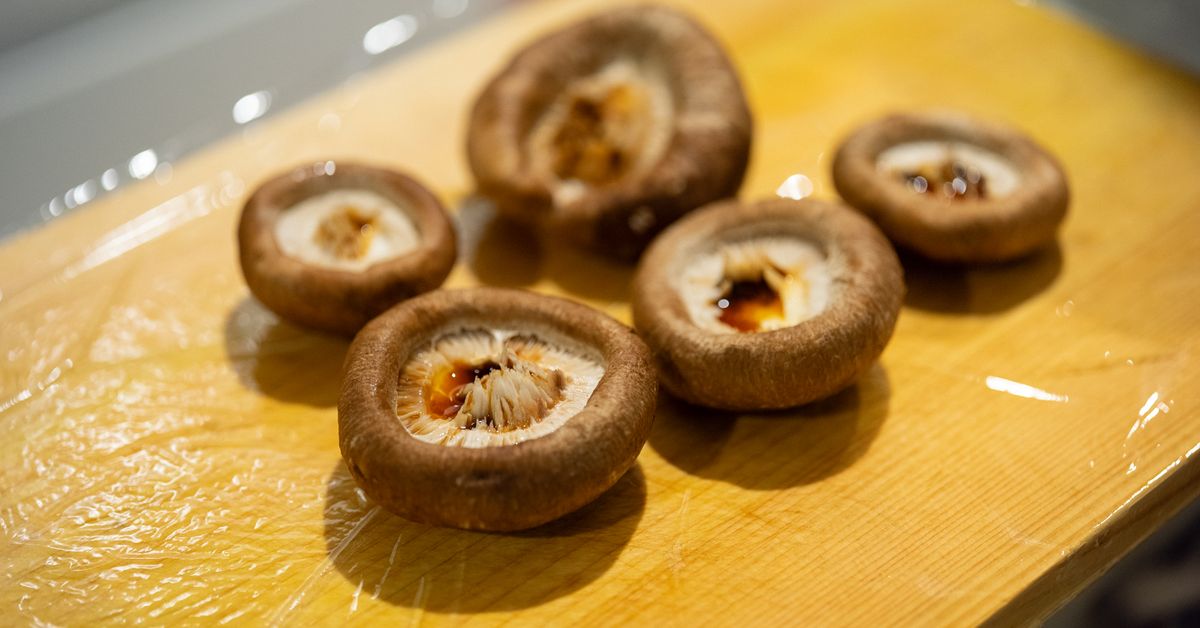
Drying shiitake is not merely preservation. It transforms the flavour, because enzymatic activity during drying generates guanylate, a nucleotide that is intensely savoury and that synergises with the glutamate already present. The result is that dried shiitake has a depth fresh shiitake simply does not, which is why dashi and most traditional broths use dried.
Rehydrate them in warm rather than boiling water, give them twenty to thirty minutes, and keep the soaking liquid. That liquid is the best part and throwing it away is the most common mistake in the kitchen. Strain it for grit and use it as stock.
Stems are tough and usually removed, but they are full of flavour and belong in the stockpot rather than the bin.
Where it sits among the others
Shiitake overlaps most with turkey tail and maitake, all three studied principally around beta-glucans and immune signalling. Lion's mane is a different proposition entirely, with a cognitive research focus and a separate compound story. Reishi is the calming one.
Shiitake's real advantage is accessibility. You can buy it anywhere, it costs very little, and you will actually eat it. A mushroom you use twice a week beats a more exotic one sitting unopened in a cupboard.
A note on the rash
Worth mentioning because it surprises people and looks alarming. A small number of people develop a distinctive streaky skin rash after eating raw or undercooked shiitake, attributed to lentinan and known as shiitake dermatitis. It is uncommon, self-limiting, and almost entirely avoided by cooking the mushroom thoroughly, which you should be doing anyway. If it happens, see a doctor.
Frequently asked questions
What is shiitake good for? It is a nutritious culinary mushroom studied principally for its beta-glucans in the context of immune signalling. It is also one of the few foods that produces vitamin D when exposed to ultraviolet light.
Are dried shiitake better than fresh? For flavour, generally yes. Drying generates guanylate, an intensely savoury compound, which gives dried shiitake a depth fresh ones lack. Keep and strain the soaking liquid, which is excellent stock.
What is lentinan? A beta-glucan isolated from shiitake, studied since the 1970s and used in Japan in a clinical setting as an injectable adjunct. Research on purified injected lentinan does not transfer to an oral shiitake supplement.
Do shiitake mushrooms contain vitamin D? They can. Mushrooms contain ergosterol, which converts to vitamin D2 under ultraviolet light, and some commercial shiitake is deliberately UV-treated. Untreated mushrooms grown in the dark contain very little.
Can you eat shiitake raw? Better not to. Beyond chitin cell walls that cook down with heat, a small number of people develop a self-limiting streaky rash from raw or undercooked shiitake. Cooking thoroughly avoids it.
Should I eat shiitake or take a supplement? Eating it is genuinely worthwhile and inexpensive. If you are interested in concentrated beta-glucans specifically, an extract with a stated beta-glucan figure delivers far more than a culinary portion.
Sources
National Center for Complementary and Integrative Health. Mushrooms.
US Department of Agriculture, FoodData Central. Mushrooms, shiitake, raw and dried.
National Institutes of Health, Office of Dietary Supplements. Vitamin D Fact Sheet for Health Professionals.
National Center for Complementary and Integrative Health. Know the Science: How Medications and Supplements Can Interact.
These statements have not been evaluated by the Food and Drug Administration. This product is not intended to diagnose, treat, cure, or prevent any disease.


