
Maitake Mushroom: Benefits and Uses
Eran Graham
Quick answer on maitake
Maitake (Grifola frondosa), known in English as hen of the woods, is one of the few functional mushrooms that is also a first-rate ingredient. It grows in overlapping fan-shaped clusters at the base of oak trees and has a rich, savoury flavour that has made it a prized find for foragers for centuries. Its research interest centres on a group of beta-glucans, and the work to date is mostly laboratory and animal research with a modest amount of early human study. It is worth being interested in and it is not established.
This article is general information, not medical advice. If you take prescription medication, are pregnant or nursing, or manage a health condition, speak with your doctor before adding any supplement.
Where the name comes from
Maitake translates roughly from Japanese as dancing mushroom. The usual explanation is that foragers danced on finding one, and given what a single cluster is worth and how long they can be hunted for without success, that is plausible enough.
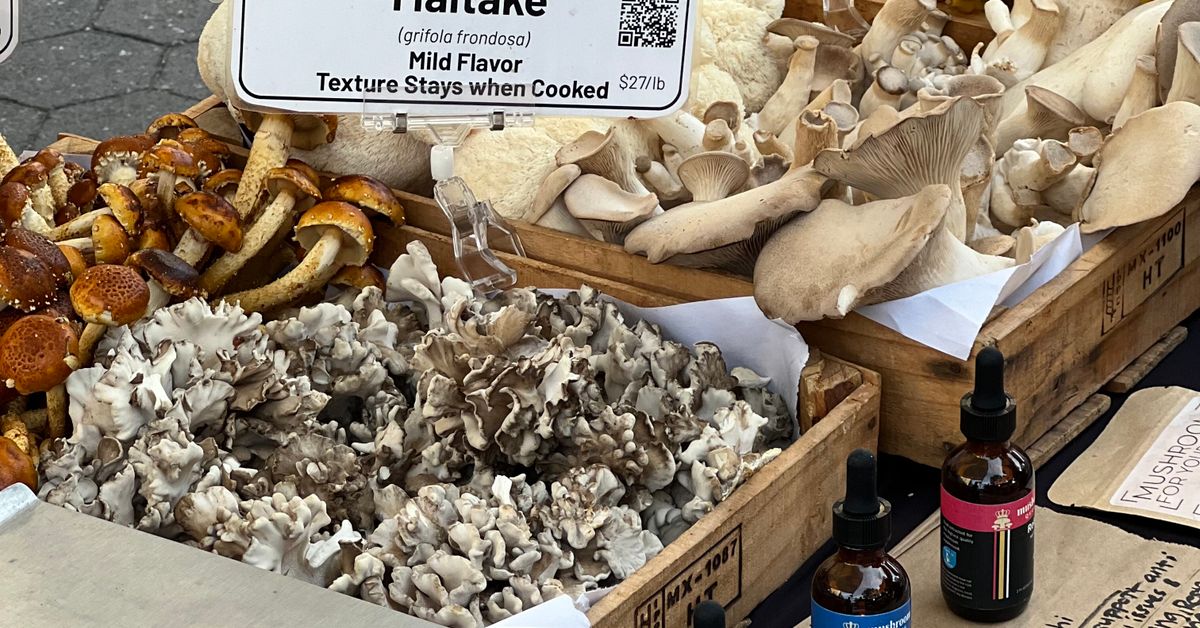
The English name, hen of the woods, describes the appearance. The overlapping grey-brown fronds sit in a ruffled rosette that genuinely does resemble the tail feathers of a hen. It is not to be confused with chicken of the woods, which is a different and far more orange mushroom entirely.
Maitake grows at the base of hardwoods, overwhelmingly oaks, returning to the same tree year after year in autumn. Foragers tend to guard the locations, for good reason.
The traditional record
Maitake has a long history in Japanese and Chinese traditional practice, where it was valued as a tonic rather than a remedy for anything specific. That distinction matters and gets flattened in modern marketing. In the traditional framing it sat in the same broad category as reishi and shiitake, mushrooms taken over long periods for general resilience rather than reached for when something was wrong.
It also has an unusually strong culinary tradition, which is less true of reishi or chaga, both of which are too woody or bitter to eat as food. Maitake was eaten because it is delicious, and the tonic reputation grew alongside that rather than instead of it.
What the research actually covers
Maitake's research interest sits almost entirely with its beta-glucans, the polysaccharides that make up much of the mushroom's cell wall and which we cover in beta-glucans explained.
Specific beta-glucan fractions isolated from maitake have been studied for their effects on immune signalling, mostly in laboratory and animal models. Some early-stage human work exists. The honest summary is that this is an active area of investigation rather than a settled one, and the gap between a compound showing activity in a dish and a supplement producing an outcome in a person is wide and frequently not crossed.
Maitake has also been examined in the context of glucose metabolism, again largely in animal models. We are not going to extrapolate from that, and anyone managing blood sugar with medication should treat maitake as something to raise with their doctor rather than add quietly, for the same reason covered in supplements and medications.
What we will say plainly: the beta-glucan chemistry is genuinely interesting, the human evidence is early, and no supplement treats or prevents any disease.
How maitake compares to the others
The functional mushrooms get marketed interchangeably, which helps nobody choose.
Maitake and turkey tail sit closest together, both studied primarily around immune signalling via beta-glucans. Lion's mane is the cognitive one, with a quite different compound story built on hericenones and erinacines. Reishi is the calming evening mushroom. Cordyceps is the stamina one.
Where maitake stands apart is that it is the best of the group to actually eat. Turkey tail is leathery, chaga is woody, reishi is bitter. Maitake is something you would choose for dinner on the merits.
Cooking and buying it
Maitake is excellent roasted or seared. Tear the cluster into smaller fronds rather than slicing, get the pan properly hot, and let it brown without crowding. The frilled edges crisp beautifully, which is most of the appeal. It holds up in stock, in risotto, and roasted whole as a side.
Fresh maitake should be firm and dry with no sliminess, and the fronds should snap rather than bend limply. Store it in paper in the fridge rather than plastic. The same technique that works for cooking lion's mane applies here, since both are mostly water and both suffer from a crowded pan.
For supplements, the questions are the ones that apply across this whole category. Is the part used stated, fruiting body or mycelium? Is there a beta-glucan figure rather than a total polysaccharide figure? Is there a batch-matched certificate of analysis? We go through all of it in how to read a mushroom supplement label.
Frequently asked questions
What is maitake mushroom? Grifola frondosa, known in English as hen of the woods. It grows in overlapping fan-shaped clusters at the base of oak trees and is both a prized culinary mushroom and a functional one studied for its beta-glucans.
What does maitake taste like? Rich, savoury and earthy, with a firm texture that crisps well at the edges when roasted or seared. It is one of the best-eating mushrooms in this group.
Is maitake the same as chicken of the woods? No. Hen of the woods is maitake, grey-brown and frilled. Chicken of the woods is a different, bright orange bracket fungus.
What is maitake studied for? Principally its beta-glucans and their effects on immune signalling, mostly in laboratory and animal research with some early human work. It has also been examined around glucose metabolism, largely in animal models.
Can you eat maitake raw? It is much better cooked. Mushroom cell walls are largely chitin, which human digestion handles poorly, and heat begins breaking it down. Raw maitake is also tough.
Should I take maitake as a supplement or eat it? Eating it is genuinely worthwhile on culinary merit. If you are interested in the studied compounds, a concentrated extract with a stated beta-glucan figure delivers far more than a portion of cooked mushroom does.
Sources
National Center for Complementary and Integrative Health. Mushrooms.
US Department of Agriculture, FoodData Central. Mushrooms, maitake, raw.
National Institutes of Health, Office of Dietary Supplements. Dietary Supplements: What You Need to Know.
National Center for Complementary and Integrative Health. Know the Science: How Medications and Supplements Can Interact.
These statements have not been evaluated by the Food and Drug Administration. This product is not intended to diagnose, treat, cure, or prevent any disease. Only eat wild mushrooms you have had identified by a qualified expert.


